New demo requestForm + company context
NEW
AI automation · Lead generation · GEO visibility
Find the friction.
Build the system.
Give time back.
I build practical AI automations, lead-to-CRM systems and Generative Engine Optimization that help growing companies operate better and become easier to find in AI answers.
Practical answer
HOW IT WORKS
Start with one repeated workflow, connect the existing tools and measure the change on real work.
Map the workBuild the workflowMeasure the result
A first diagnostic usually takes 30 minutes.Discuss your workflow →
AI automationLead generationGEOWebsitesMake · n8n · Clay · APIs
One system, visible end to end
Your tools already hold the work.
The missing layer is the flow.
Select a common workflow. Watch the information enter, gain context and arrive where the team needs it — without another platform to manage.
LIVE SYSTEM PREVIEW
01 / ARRIVES
nameMaya ChencompanyNorthstarrequestProduct demo
Make
n8n
OpenAI
Airtable
02 / AUTOMATION LAYER
Qualify & route
Validating fields…
03 / UPDATES
HubSpotRecord created
✓SlackOwner notified
✓NotionBrief stored
✓
EVENT STREAM
RESULTA qualified lead with an owner and a next step.
Freelance services
Five ways to move
from idea to delivery.
Choose one focused outcome. Every engagement is scoped around a working deliverable, clear acceptance criteria and a handover you can keep.
01AI OPERATIONS
AI workflow automation
Turn repeated operational work into a reliable flow across the tools your team already uses.
- n8n, Make, Zapier and APIs
- Research, documents and reporting
- Monitoring, exceptions and handover
02REVENUE SYSTEMS
Lead generation & CRM
Research, enrich, qualify and route the right prospects into a usable sales pipeline.
- Clay research and enrichment
- AI qualification and scoring
- HubSpot routing and follow-up
03FINANCE SYSTEMS
Finance workflow automation
Reduce manual processing while keeping financial data structured, traceable and decision-ready.
- Invoices and document flows
- Controls, reconciliation and alerts
- Management reporting
04WEB PRESENCE
Modern showcase websites
Launch a fast, distinctive website that explains the offer clearly and turns attention into conversations.
- Strategy, copy and responsive design
- Calendly, forms and analytics
- Deployment and technical SEO
05AI DISCOVERABILITY
Generative Engine Optimization
Make your offer easier for AI answer engines to understand, retrieve and cite when buyers ask relevant questions.
- AI visibility and citation audit
- Entity, content and source architecture
- ChatGPT, Claude, Perplexity, Gemini & Meta AI checks
Generative Engine Optimization
Be understood before
you can be recommended.
GEO improves the signals AI systems use to interpret your company: who you help, what you do, why you are credible and which sources support the answer.
BUYER ASKSWho can solve this?
YOUR BRANDClear · credible · retrievable
◎ChatGPT
✣Claude
✦Perplexity
✧Gemini
Clarify the entity
Offer, audience, expertise and proof become unambiguous.
Build source-ready pages
Useful answers, structured data and supporting sources become retrievable.
Measure the answers
Representative prompts reveal coverage, citations and gaps over time.
GEO VISIBILITY COCKPIT
DEMONSTRATION DATASee what the answer engines can actually find.
ILLUSTRATIVE VISIBILITY TRENDShare of monitored answers
ChatGPT Claude Perplexity Gemini Meta AI
No invented rankings. No guaranteed citations.
Every engagement defines the prompt set, records the baseline and turns observable gaps into an implementation backlog.
See the GEO method →What changes in the business
Less administration.
More forward motion.
Not a collection of AI features. Three practical outcomes, shown through the work your team already does.
HOW VALUE IS PROVED
Every project starts with your baseline and is tested on your own cases.
AUTOMATE · LIVE PREVIEW Processing request
New customer requestEmail · 8 fields · attachment
ExtractingCRM recordFields matched · owner found
UpdatingOwner briefContext · next step · due date
ReadyReadStructureUpdateAssign
Needs attention12accounts
NEXT ACTION
Send each owner a brief with usage, risk signal and the next recommended step.
ONE EVENTCustomer signed
A progressive engagement
Each stage earns
the next one.
Method and commercial scope are the same thing: start small, inspect the evidence and only invest further when the result is worth it.
01
5 working days
PRIORITY FOUND
Choose the workflow.
Map the repeated work, its cost and the clearest place to create leverage.
- Workflow and friction map
- Value and feasibility score
- One prioritized business case
02
2–4 weeks
TEST CASES RUNNING
Prove it on real work.
Build a working version, run representative cases and make every exception visible.
- Working end-to-end prototype
- Test and exception evidence
- Feedback from the process owner
03
Scope-led
LIVE
WorkflowHealthyOwnerAssigned
Make it part of the business.
Connect production tools, add monitoring and transfer the system to the team.
- Production integrations
- Monitoring and recovery path
- Documentation and handover
Useful before the call
Tools to make
a better first decision.
Read the framework, calculate the opportunity or check whether a workflow is ready to prototype.
GUIDE · 8 MIN
12
The first tasks worth automating
A practical way to spot good starting points and avoid expensive distractions.
Read the guide → INTERACTIVE TOOLAutomation ROI calculator
Estimate the time, cost and annual value tied to one repeated process.
Run your numbers → 15-POINT CHECK✓✓··
Is this workflow ready?
Score a real project and identify what must be resolved before a build.
Check readiness → JUSTIN ESCOUROLLES
AI AUTOMATION FREELANCER
A business-first point of view
Automation with financial discipline.
ESSEC Business School–trained, with experience shaped at the French Ministry of Economy, HSBC and BPCE. I focus that rigor on practical automation for growing teams.
ESSECAI automationFinance & operations
Read the full profile →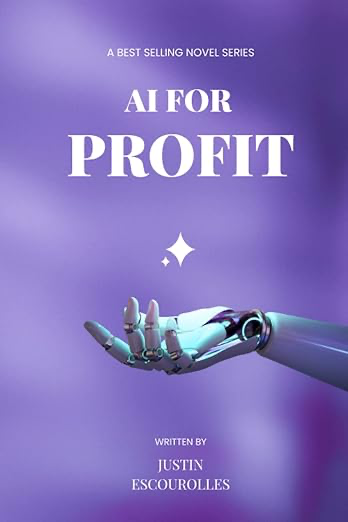
PUBLISHED WORKAI for ProfitFrom AI potential to useful business leverage.Explore the book →
Questions
Straight answers.
No jargon, no inflated transformation programme. Just what it takes to turn one bottleneck into a working automation.
Repeated work with a clear input and output: lead handling, onboarding, document processing, reporting, research briefs, CRM updates and cross-tool coordination are common starting points.
We compare frequency, time spent, error cost, data availability and ownership. The best first workflow is valuable enough to matter and narrow enough to test quickly.
Usually not. The goal is to make tools such as HubSpot, Notion, Slack, Google Workspace, Make or n8n work together more intelligently.
No. Simple rules are often faster and more reliable. AI is added where language, documents, classification or synthesis genuinely improves the workflow.
An opportunity map takes five working days. A focused prototype typically takes two to four weeks, depending on the tools, data and number of test cases.
No internal AI team is required. We do need access to representative examples and one person who understands the current process. Data gaps are identified before the prototype.
The final build includes monitoring, documentation and a clear recovery path. Your team receives the system and the knowledge needed to operate it.
Yes. I build modern showcase websites for startups and small teams, including positioning, copy, responsive design, forms, Calendly, analytics, technical SEO and deployment. The site can also connect directly to your CRM and follow-up workflows.
SEO helps pages rank in search results. GEO focuses on the clarity, sources, structure and technical access that help generative answer engines understand and cite a brand. The two disciplines overlap, but the questions and measurements are different.
We name one bottleneck, map its operating logic and decide whether there is a useful next proof. You leave with a clearer next move, even if that move is not a build.
First conversation
Bring one bottleneck.
Leave with a clearer next move.
Thirty focused minutes to map the problem, estimate the opportunity and decide whether it deserves a prototype.
Choose a time on Calendly ↗30-minute working session
CALENDLY